

For the last six months, the skeptical cardiologist has been using the ambient AI medical scribe, Freed, on all his in-person and telemedicine patient visits.
I reported optimistically on my preliminary experience with this program 6 months ago
writing that it “enhances my performance as a clinical cardiologist.”
I am so enamored of Freed at this point that if I forget to push the “capture conversation” button on my iPhone before starting the patient encounter I curse myself.
Freed is one of many (>100) ambient medical scribe tools being used by clinicians. The programs listen to the visit between a health care provider and a patient and use generative AI to quickly summarize the visit in an organized note which is available within minutes to edit and insert into the electronic health record.
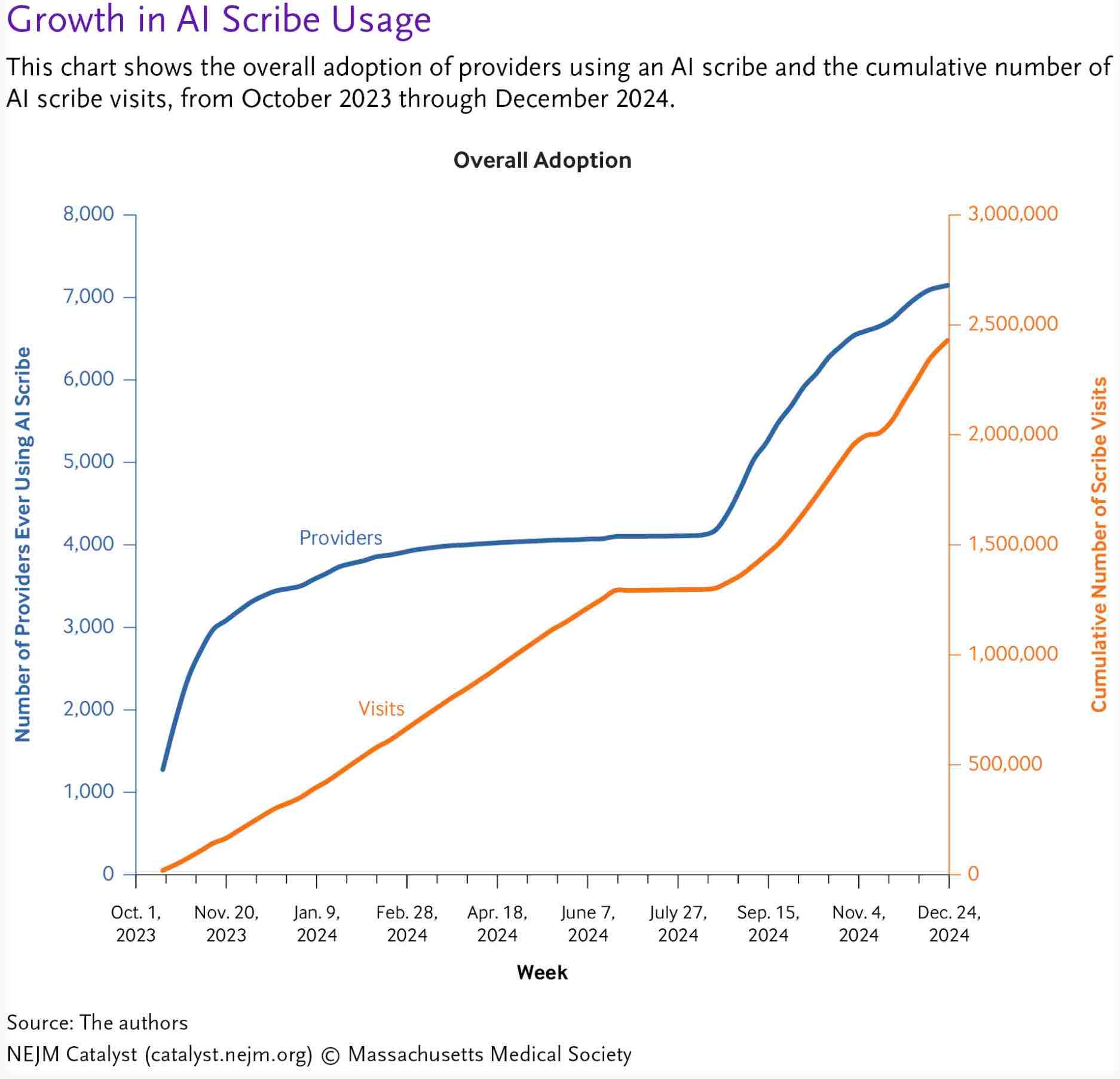
The Permanente Group recently updated their experience with AI medical scribes noting that both physicians and patients were positive about its use during visits and that providers were rapidly adopting it across the organization.
Prior to using Freed (and Cleerly for AI CCTA analysis) I had been skeptical of the benefits of AI in health care.1
Capturing the Conversation Completely
Prior to Freed, during the patient encounter, I was constantly typing notes into my laptop. Most doctors feel they can do this and still listen to the patient actively but something is lost in the face-to-face human interaction when we are multi-tasking.
With Freed capturing our conversation now I am totally engaged in my conversations with patients. As a result I’m a better communicator and i do a better job of active listening and questioning.
It is hard to quantify how much better this makes me in delving into the patient’s symptoms and understanding more precisely what their concerns are but I’m convinced that focusing on just what the patient is saying and thinking and about appropriate follow-up questions makes me a better clinician.
In addition to generating an excellent start to my note which captures the HPI in great detail, Freed provides me with a complete transcript of the visit. If I forget whether I discussed a treatment or diagnostic imaging suggestion with the patient i can refer to this complete transcript.
Often during visits I briefly mention that I will send the patient a link from my blog/substack websites on a topic we discussed (like coronary calcium scans, dietary recommendations, exercise recommendations, CCTA, etc.) Freed typically doesn’t put those specifics in the note for the chart but i can find it in the complete transcript.
During my intensely busy practice life, seeing follow-ups every 20 minutes I rarely completed a note on one patient before moving on to the next patient. The notes would be completed after clinic and hospital patient visits and they would be based on my (often incomplete) notes from the visit.
Generating an Informative note
In my experience, the majority of human doctor-composed consultation notes do a poor job of recording the patient’s “history of present illness.”
This is likely due to a combination of poor information gathering and poor information recording. The quality of both of these factors can be greatly improved by spending more time with the patient and on crafting a note that conveys the facts of the case and your thoughtful assessment of the problems and complete documentation of the recommendations to the patient.
A good AI scribe facilitates all of these aspects.
Within a minute or two of ending the Freed listening episode it has generated a full note with sections on the HPI, objective imaging/lab results, assessment/plan and instructions for the patient.
History of Present Illness (HPI)
Freed usually nails the HPI , including much of the information I have extracted from the patient and puts it into an accurate, succinct version.
In contrast, Doximity Scribe, which is provided free to physicians does a lousy job of recording key parts of the HPI.
For example, during a recent visit I asked a new patient a series of questions to more completely characterize an episode of “chest pounding” she experienced. The Doximity note did mention the duration of the episode but missed gathering any information from the entire series of questions I asked regarding the nature of the pounding and possible precipitating circumstances. Freed typically would have noted all these aspects.
Past Medical History and Laboratory/Imaging results
Freed does an outstanding job of taking note of anything that is mentioned about past medical problems. It also faithfully clocks lab results and imaging results if I read them aloud (sometimes before the visit and often during the visit) and puts them in the appropriate portion of my notes.
Doximity does this poorly and failed to note the cholesterol values for my patient with the chest pounding.
Social History and Family History
I delve deeply into my patient’s social history and family history. In addition to whether they smoke or drink, I am very interested in their detailed diet and physical activity. Freed records these details very accurately.
For family history, I ask patient specifically about each first-degree relative including their age, presence of any cardiac-related disease, onset and nature of the disases, age at death and cause of death. This can be quite tedious to record and enter into the EHR but with Freed it is captured in detail and place in an appropriate area
The Assessment and Plan
In my notes (both initial consultations and follow-up progress notes) I like to list the problems that I am addressing and provide a succint summary of the data relevant to each problem along with an analysis of severity, success in treatment, and treatment goals. This is the Asessment part of the note.
After writing the problem assessment I list the components of the Plan for that particular problem.
Some physicians lump all the problems together (typically with minimal or no discussion for each problem) and then provide a minimalistic summary of the plan (typically just lab or diagnostic imaging ordered plus any medications ordered.)
Given time, I will include a lot of discussion on problems which are complicated in my assessments.
Fortunately Freed creates an Assessment and PLan which is very similar to the way I would have done it.
This is an A/P that Freed recently generated:
Coronary Artery Disease
Assessment:
Recent coronary CT angiogram revealed significant plaque buildup in coronary arteries, with calcium score over 600, indicating advanced atherosclerosis for patient's age. Left main artery is clear. LAD shows <25% stenosis proximally and <40% stenosis mid-artery. Circumflex has 29% stenosis proximally, with a small branch showing 50-75% stenosis. Despite extensive plaque, no immediate need for invasive interventions like bypass or stenting is indicated. Patient reports feeling occasional heaviness in the chest, particularly around mealtimes, but denies chest pain or shortness of breath during exertion.
Plan:
Start rosuvastatin (dose not specified) to replace atorvastatin for more aggressive LDL reduction
- Target LDL below 55 mg/dL to prevent further plaque buildup
- Order lipid panel in one month to assess medication efficacy
- Continue regular exercise with instruction to report any new symptoms
- Discuss potential use of HeartFlow analysis for further evaluation of coronary blood flow
- Follow up in 5 weeks via telemedicine appointment
This is actually better than the A/P I would have recorded2
Room for Improvement
Freed is not perfect. I still have to review every sentence for slight misunderstandings or errors. But I find the company is very responsive to any flaws I find or suggestions I make.
When I first started using Freed (December 2024) it was conflating review of systems info with the physical examination. Here’s an example:
- Physical Examination: - General: No acute distress observed. - Cardiovascular: No chest pain or shortness of breath reported during exertion. - Neurological: No symptoms of stroke or transient ischemic attacks noted.
I sent them an email and within a month it had stopped doing that.
A Total Transcript of the Visit
Freed provides me with a “transcript” of the patient visit, which is a faithful recreation of what my patient and I said. I find this useful for recalling what skeptical cardiologist links I promised to send them.
If you click on the button below the transcript that says “full transcript” it gives you a non-filtered version of the conversation. Sometimes I look at this because I find it is weirdly interesting to view my exact words when describing test results or conditions or treatment options.
During one visit I started Freed prior to starting the visit and read outloud a number of labs and imaging results along with the patients problems and medications. I left Freed recording for a few minutes while looking at the patient’s chart and then initiated the visit. Freed managed to confabulate an entire bizarre conversation for the silence before I say hello:
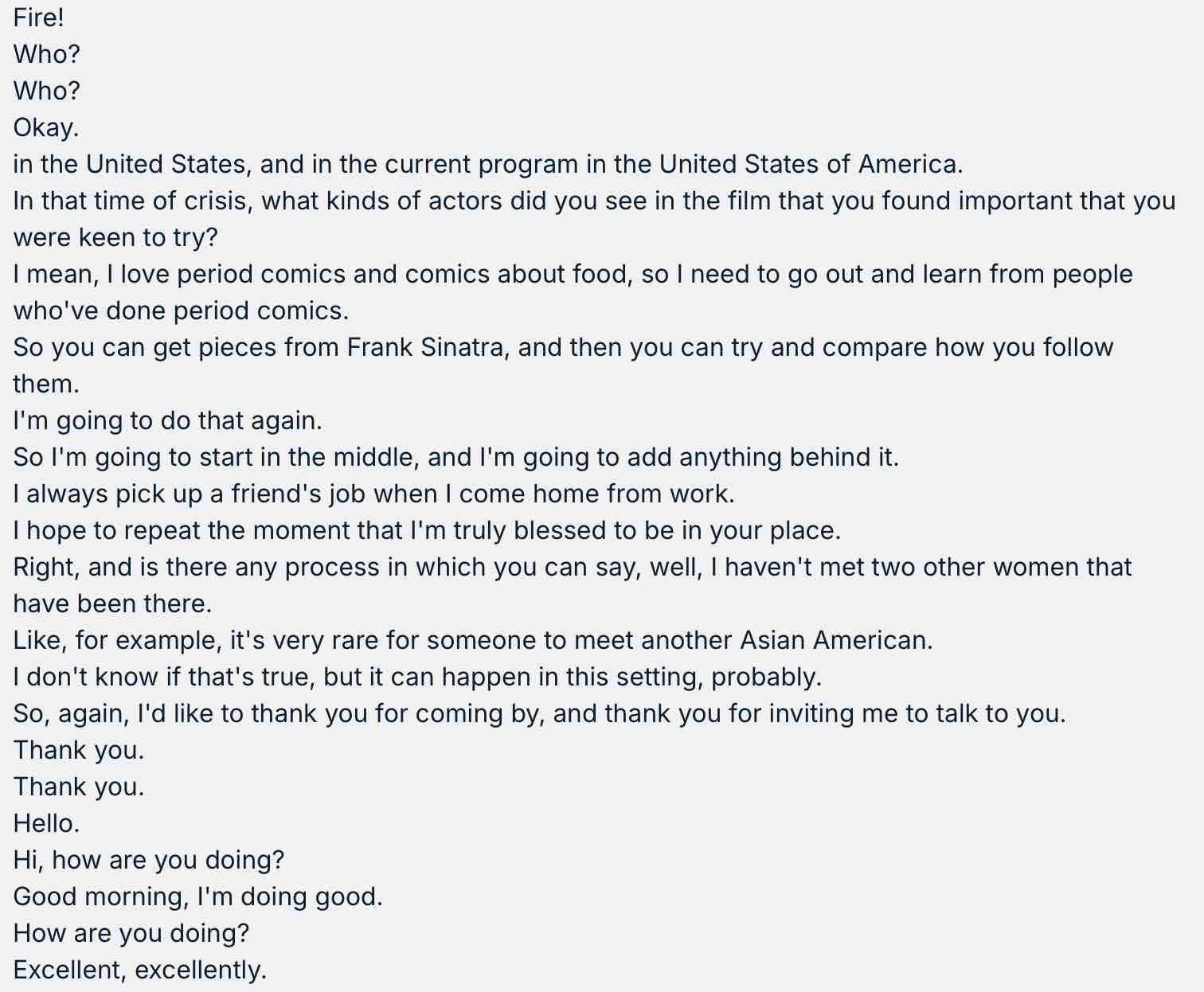
Fortunately, none of the components of this hallucinatory conversation appeared in the Freed-generated note or the non-complete version of the transcript.
Final Thoughts
I have become addicted to the Freed AI medical scribe. I love being able to walk into the exam room and just talk to the patient without trying to simultaneously take notes.
If I successfully activate Freed (which is not a given) for my visits I know I have a complete record of what was said and if I don’t create the visit note right away it will be a breeze to complete a day or two later (or God forbid a month later when the billing people notify me that I didn’t complete it.)
In addition to reducing stress, the scribe also makes me a better listener and communicator and saves me time in documentation.
Assiduously Yours,
-ACP

So, I'm not a doc, but a paramedic. I wonder how well it'd work in the EMS/prehospital setting? I've looked at it, and played, without real patients, using the free trial. I'm impressed, too.
Thanks for the thorough review!
Author Robert Wright (soon to publish a book on AI) posted about using AI from the patient perspective with his recent bout with cancer on his NonZero substack (link below). What blew my mind is that his medical providers posted test results that were positive for cancer (with lots of jargon he didn't understand) on his MyChart BEFORE calling him. I always thought if test results were bad, the doctor would call the patient BEFORE the results got posted to the patient portal, but apparently not. Since Bob pays for a good AI app and is very familiar with using it, of course he asked AI all kinds of questions about his test results. (Listen to the excerpts if interested in the details). If medical practices are going to post scary test results BEFORE talking to the patient, perhaps they could at least have AI provide some interpretation of them, since not everybody has access to a good AI app or the knowledge of how best to use it.
https://substack.com/home/post/p-169007025