

The skeptical cardiologist was in the process of writing about the rapidly declining role of stress testing in cardiology1 when he encountered remarkable examples of the spectrum of accuracy that AI-generated information presents.
I was going to update my post on whether stress testing is needed after a high (or very high) coronary artery calcium score2 when i decided to ask Open Evidence what it thought.
I’ve been testing Open Evidence, which is now the world’s leading online medical platform for physicians, for the last few weeks and I have found its answers to be remarkably accurate3. In addition, whereas previous AI chatbots I’ve used provided me with fake, hallucinated references, OPen Evidence has been giving me accurate, helpful references.
Here is its answer to my question:
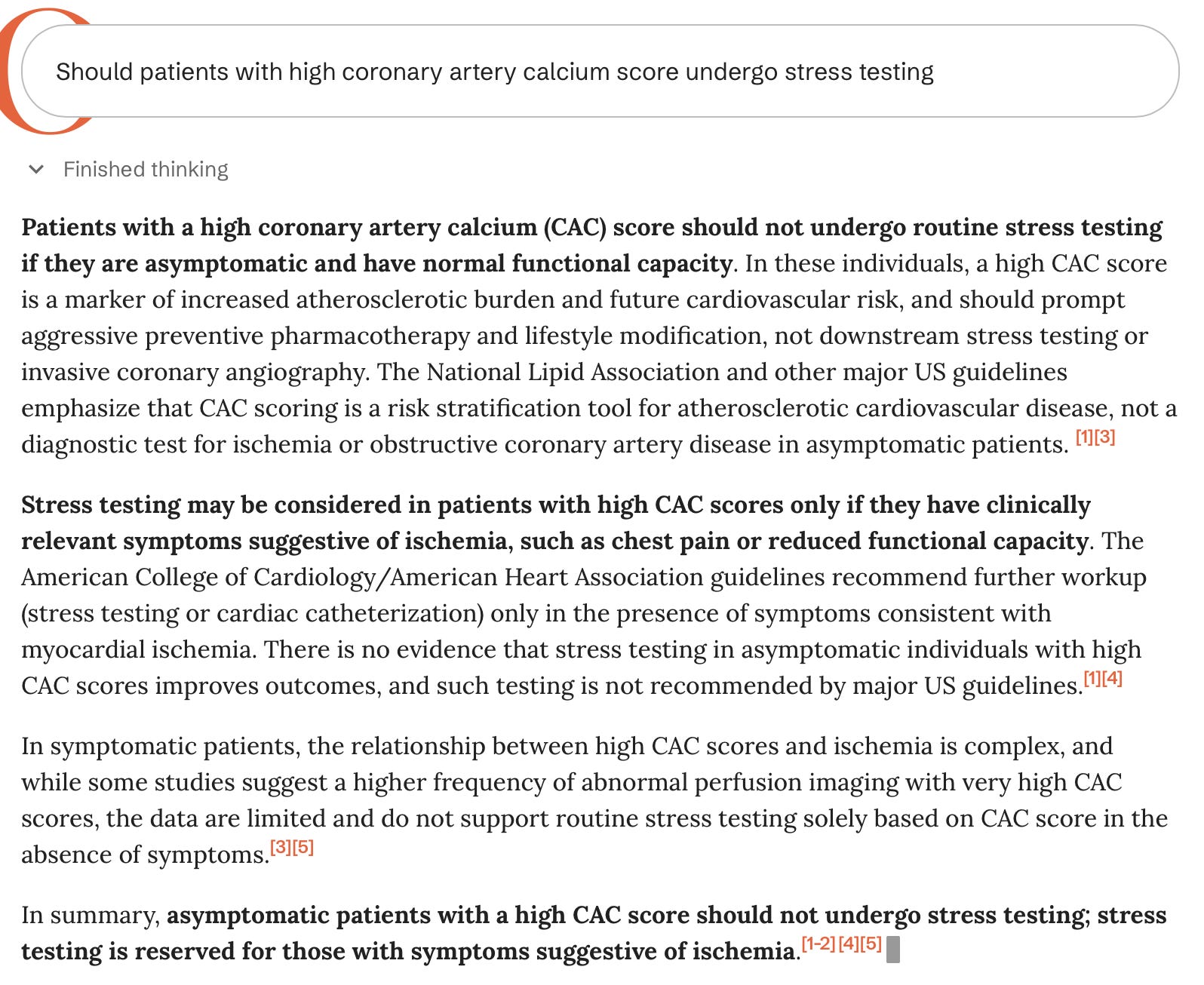
To my surprise, it answered correctly! The references it gives include Schade, et al. which I quoted extensively in my 2019 piece
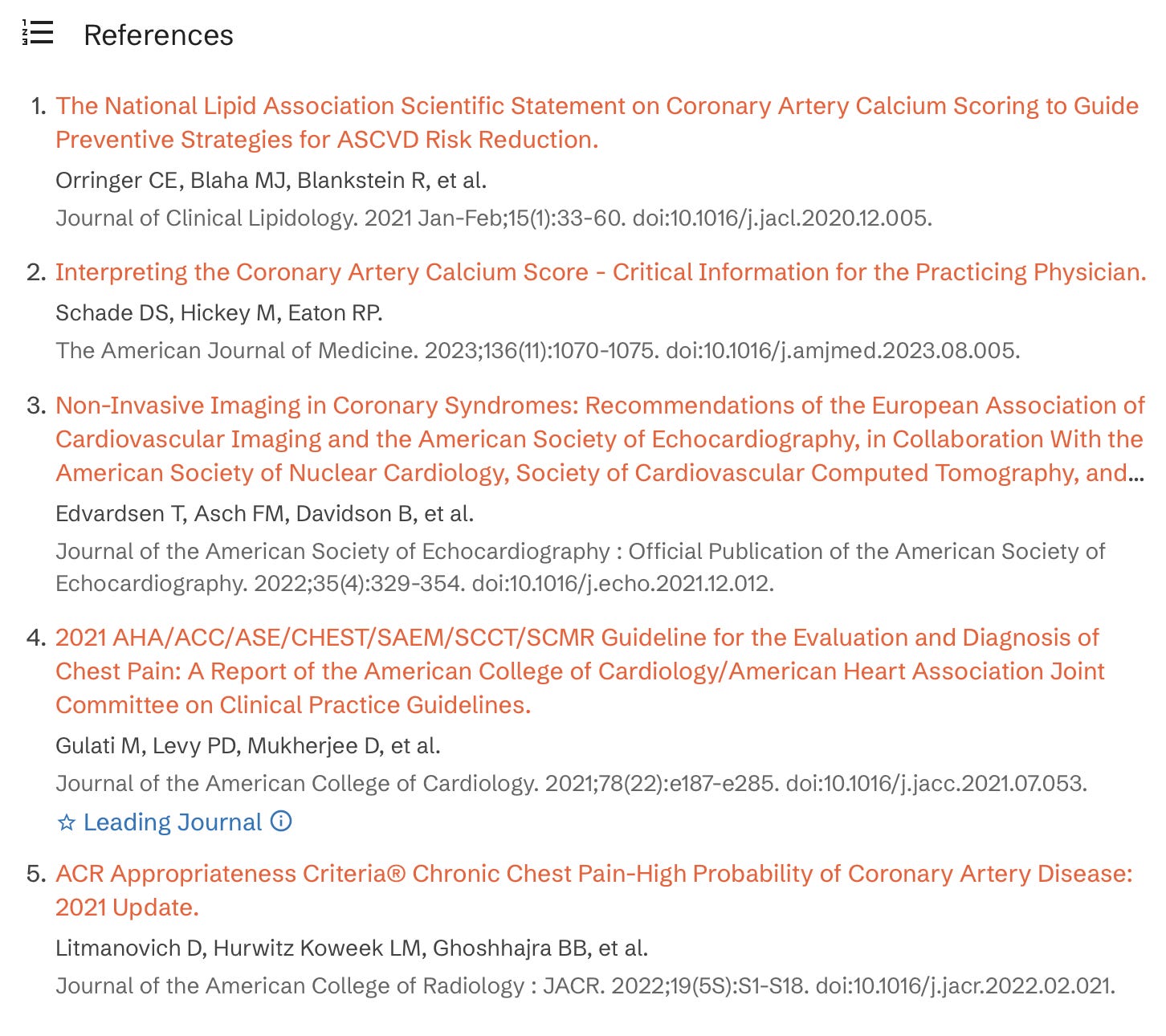
This reference list is hyperlinked which is wonderful. In addition, you can share a link to the anwer/question with the public (for this question it is here) or email to a friend or colleague.
Really Bad Information-Google AI
In contrast to Open Evidence, Google’s “AI overview”, which pops up every time I make a Google search is consistently inaccurate and links to useless websites or YouTube videos.
While writing my updated article on stress testing, Neil Young’s Cowgirl in the Sand came up on my Apple music shuffle. It is one of my favorite songs and I had to stop, pick up my Les Paul and jam along. The Byrds made a version of Cowgirl which has a different chord structure which I used to know by heart. When I searched Google for the Byrds progression I got this AI overview telling me The Byrds did not record or release a song by that name.
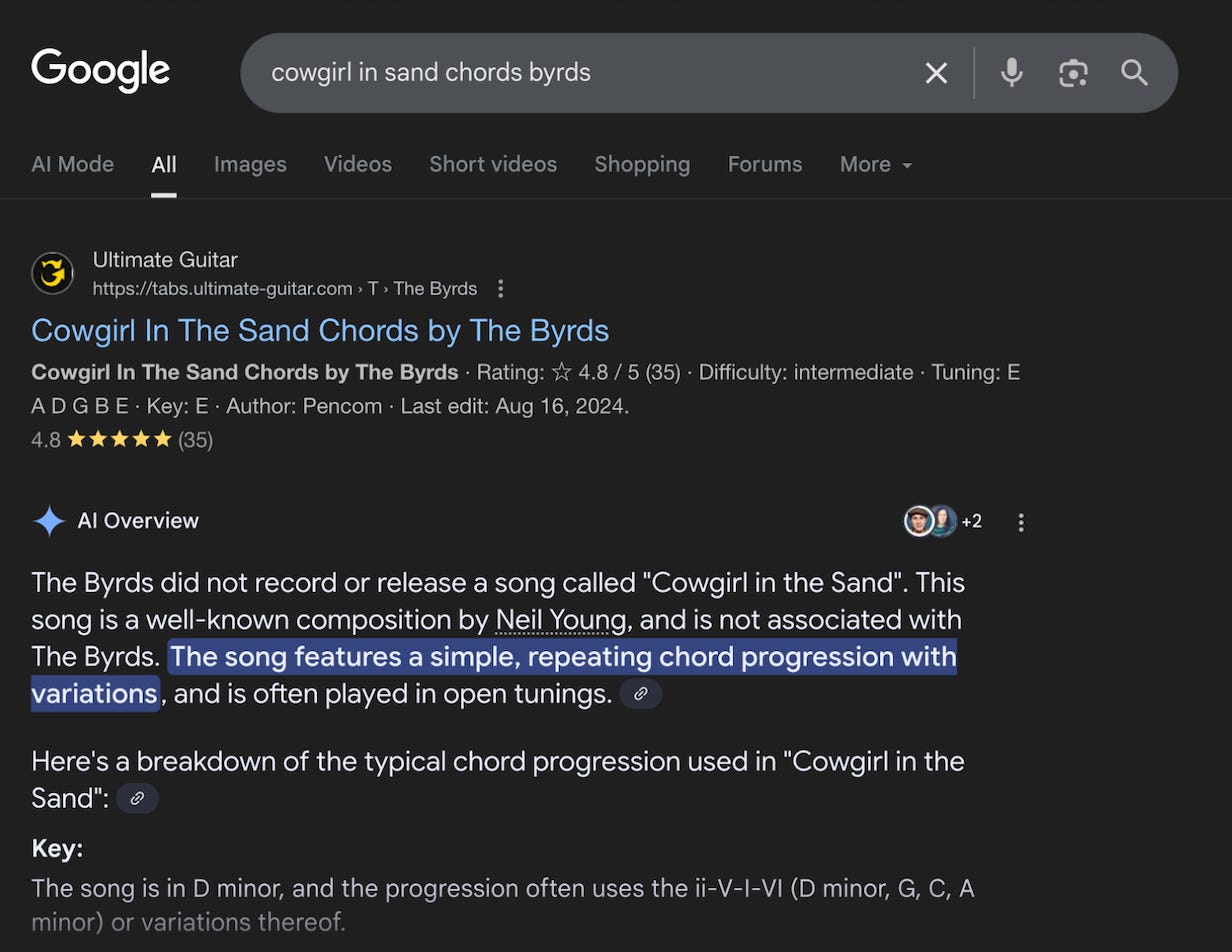
BTW, Neil Young’s version is not in D minor.
Commandingly Yours,
-ACP
Since I may never publish my article, if you want to know why stress testing should become obsolete read Dr. Gregory Katz’s article. As usual, he is 100% right. Coronary CT angiography with AI quantification of plaque and blood flow is what doctors should be choosing when they want to know a) does my patient have coronary plaque b) How much plaque and what type is it and c) Is the plaque obstructing blood flow.
And PLEASE keep in mind, stable coronary artery disease is best treated medically with interventions withheld for refractory symptoms.

Since my 2019 post I’ve concluded that very few if any asymptomatic individuals should be undergoing stress tests after a high coronary calcium scan score.
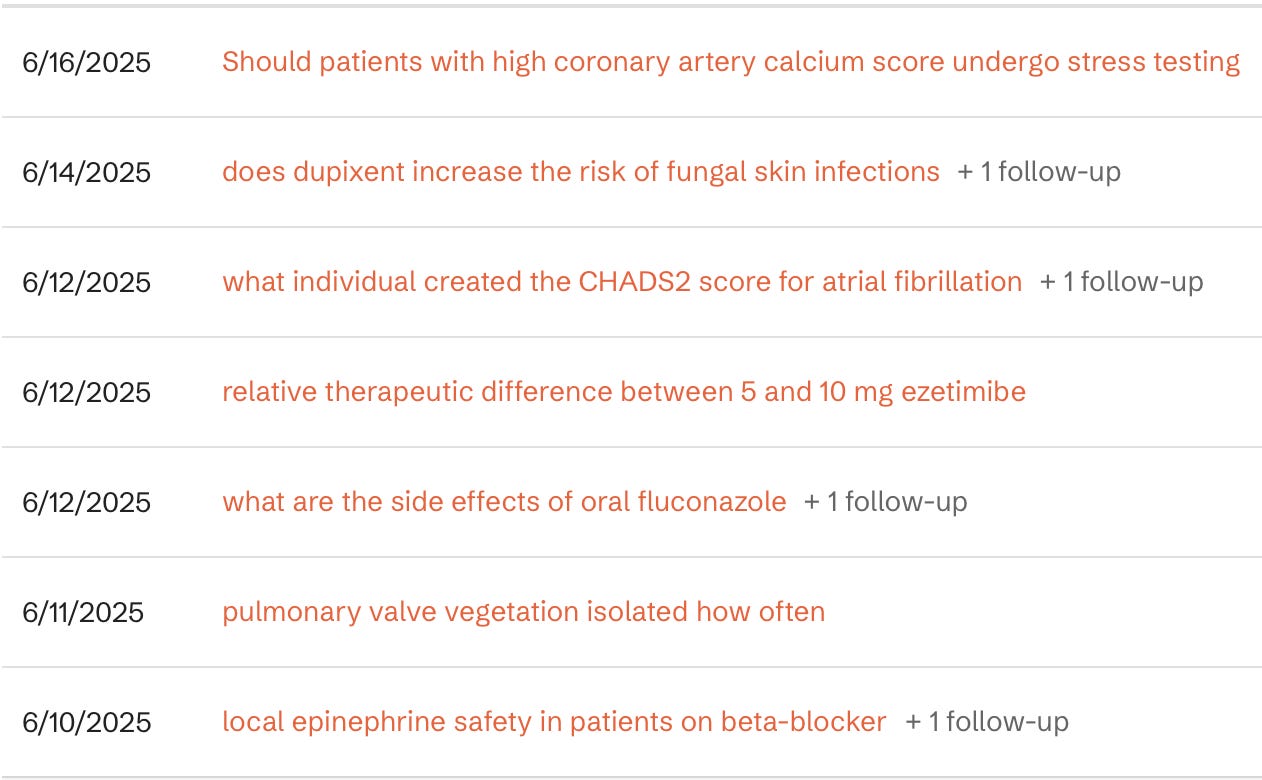
Here are some of the questions I’ve asked OE.
Open evidence is terrific! Just ran a few questions through and found it agrees with uptodate and is easier to navigate— thanks!
Cowgirl in the Sand was one of my late husband's favorite. By Neil Young of course! Thanks for sharing 💕